
The History Of Science

history of science
the development of science over time.
On the simplest level, science is knowledge of the world of nature. There are many regularities in nature that humankind has had to recognize for survival since the emergence of Homo sapiens as a species. The Sun and the Moon periodically repeat their movements. Some motions, like the daily “motion” of the Sun, are simple to observe, while others, like the annual “motion” of the Sun, are far more difficult. Both motions correlate with important terrestrial events. Day and night provide the basic rhythm of human existence. The seasons determine the migration of animals upon which humans have depended for millennia for survival. With the invention of agriculture, the seasons became even more crucial, for failure to recognize the proper time for planting could lead to starvation. Science defined simply as knowledge of natural processes is universal among humankind, and it has existed since the dawn of human existence.
The mere recognition of regularities does not exhaust the full meaning of science, however. In the first place, regularities may be simply constructs of the human mind. Humans leap to conclusions. The mind cannot tolerate chaos, so it constructs regularities even when none objectively exists. Thus, for example, one of the astronomical “laws” of the Middle Ages was that the appearance of comets presaged a great upheaval, as the Norman Conquest of Britain followed the comet of 1066. True regularities must be established by detached examination of data. Science, therefore, must employ a certain degree of skepticism to prevent premature generalization.
Regularities, even when expressed mathematically as laws of nature, are not fully satisfactory to everyone. Some insist that genuine understanding demands explanations of the causes of the laws, but it is in the realm of causation that there is the greatest disagreement. Modern quantum mechanics, for example, has given up the quest for causation and today rests only on mathematical description. Modern biology, on the other hand, thrives on causal chains that permit the understanding of physiological and evolutionary processes in terms of the physical activities of entities such as molecules, cells, and organisms. But even if causation and explanation are admitted as necessary, there is little agreement on the kinds of causes that are permissible, or possible, in science. If the history of science is to make any sense whatsoever, it is necessary to deal with the past on its own terms, and the fact is that for most of the history of science natural philosophers appealed to causes that would be summarily rejected by modern scientists. Spiritual and divine forces were accepted as both real and necessary until the end of the 18th century and, in areas such as biology, deep into the 19th century as well.
Certain conventions governed the appeal to God or the gods or to spirits. Gods and spirits, it was held, could not be completely arbitrary in their actions. Otherwise, the proper response would be propitiation, not rational investigation. But, since the deity or deities were themselves rational or bound by rational principles, it was possible for humans to uncover the rational order of the world. Faith in the ultimate rationality of the creator or governor of the world could actually stimulate original scientific work. Kepler’s laws, Newton’s absolute space, and Einstein’s rejection of the probabilistic nature of quantum mechanics were all based on theological, not scientific, assumptions. For sensitive interpreters of phenomena, the ultimate intelligibility of nature has seemed to demand some rational guiding spirit. A notable expression of this idea is Einstein’s statement that the wonder is not that humankind comprehends the world but that the world is comprehensible.
Antiquity and the Ancient World
Early science was driven by practical needs—such as farming and navigation—and early mythological or religious cosmologies. [1, 2]
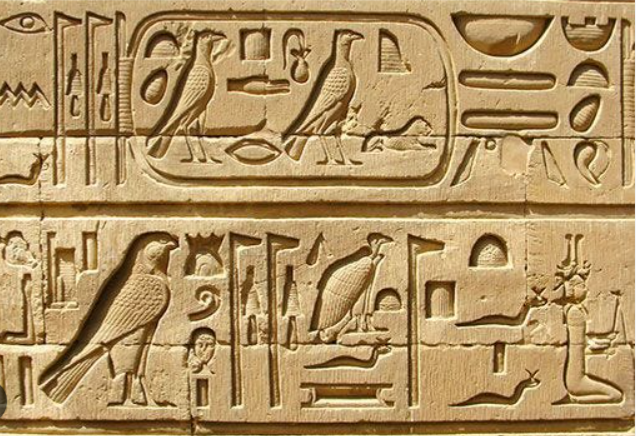
Mesopotamia and Egypt:
Civilizations developed mathematical and astronomical systems (like early base-16 number systems and calendar tracking) to measure time and map the heavens

Classical Greece:
Thinkers like Aristotle and Thales attempted to explain natural phenomena using logic and observation, creating the foundation for formal natural philosophy. [1, 2]
The Islamic Golden Age and Medieval Europe
Following the decline of the Roman Empire, the epicenter of scientific advancement shifted to the Islamic world. [1]
Scholars of the East:
Figures like the Persian polymath Geber pioneered the experimental method in the 8th century, while Al-Khwarizmi developed algebra. [1]
Preservation:
These scholars translated, preserved, and vastly expanded upon ancient Greek texts, ultimately feeding this restored knowledge back into Western Europe during the Middle Ages.
The Scientific Revolution (16th-17th Centuries)
This period marked a radical transformation in how humans studied nature, breaking away from purely philosophical tradition to embrace the empirical scientific method. [1]
Copernicus and Galileo:
Nicolaus Copernicus famously proposed a heliocentric (sun-centered) solar system, while Galileo Galilei utilized the newly invented telescope to observe the skies and conduct rigorous physics experiments.
Isaac Newton:
Culminating with Newton’s Principia Mathematica in 1687, this era introduced universal laws of motion and gravity. [1, 2, 3, 4, 5]